 The lab brings together question-driven, computational, and technique-driven scientists to study cellular and network computation across brain and body underlying flexible behavior.
Below are examples of projects ongoing in the lab and in collaboration with other groups.
We are always open to exploring new questions and new approaches - if you want to join or collaborate, please get in touch.
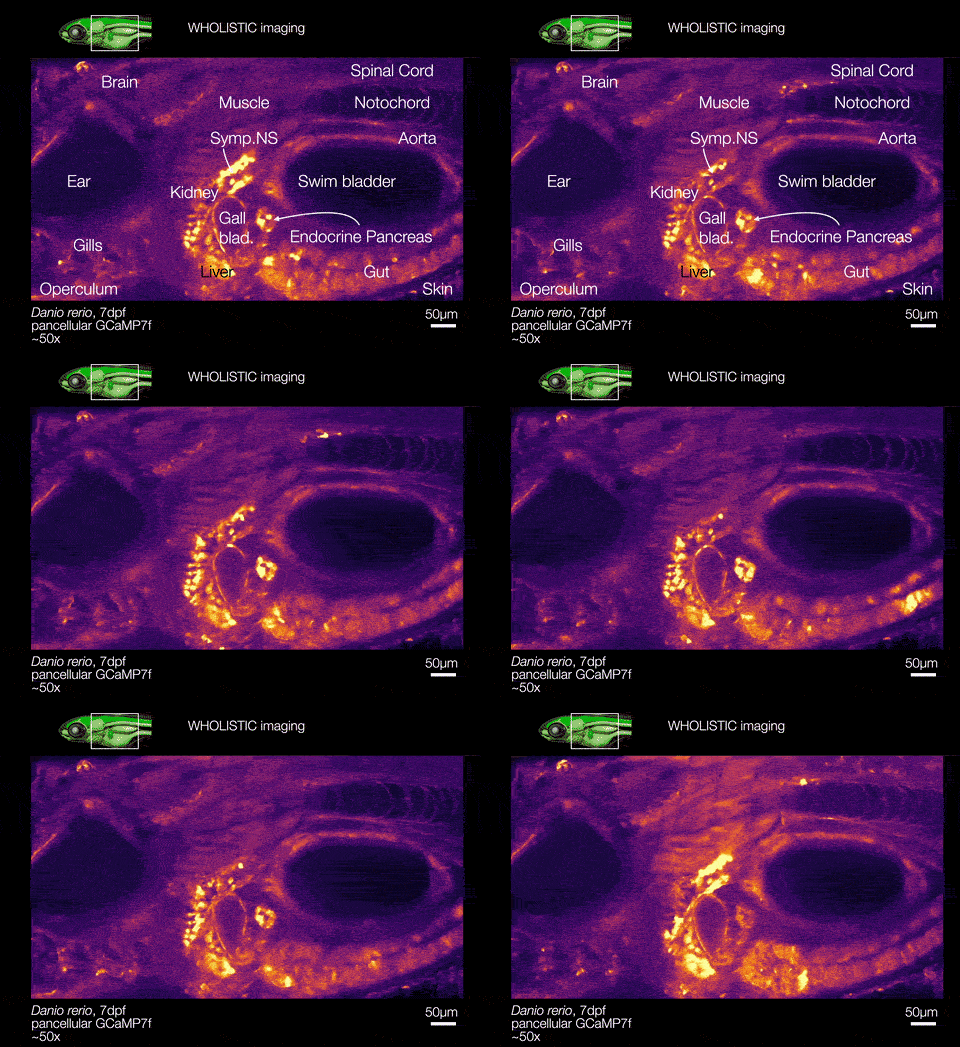 Whole-organism physiology via whole-body cellular activity imaging (WHOLISTIC)
Organisms function as a whole, with cells across the body communicating to coordinate perception, behavior, interoception, and physiological control. Where previously we developed whole-brain imaging to study brain-wide computation, here we developed whole-body cellular activity imaging to study information processing and physiology across an entire fish. HHMI's Nanci Bompey's piece about this work here: A ‘WHOLISTIC’ View of Cellular Communication Across an Entire Animal Article: Ruetten et al., Nature 2026
Website and resources: WHOLISTIC website
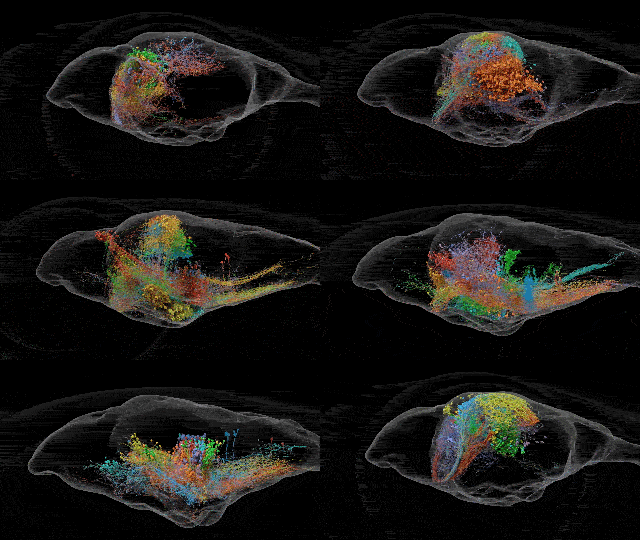 Whole-brain connectomics
Together with groups across multiple institutions, we are working on whole-brain connectomics, fused with whole-brain activity recordings during beahvior. More information here: Fish Fire&Wire website
Learning and memory
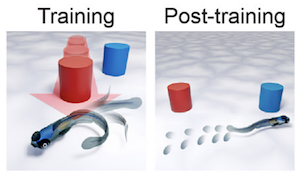
 Rapid learning:
Zocchi et al., Current Biology 2025
Rapid learning:
Zocchi et al., Current Biology 2025
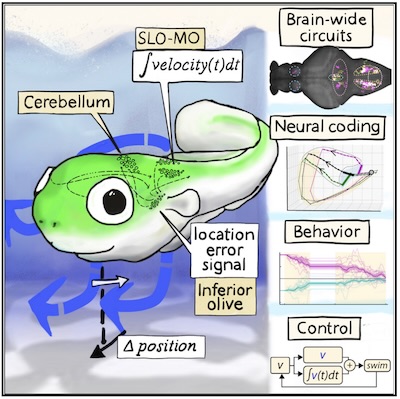
Positional memory: Yang et al., Cell 2022
Rapid learning:
Zocchi et al., Current Biology 2025
Positional memory: Yang et al., Cell 2022
 Brain states, neuromodulation, and glia
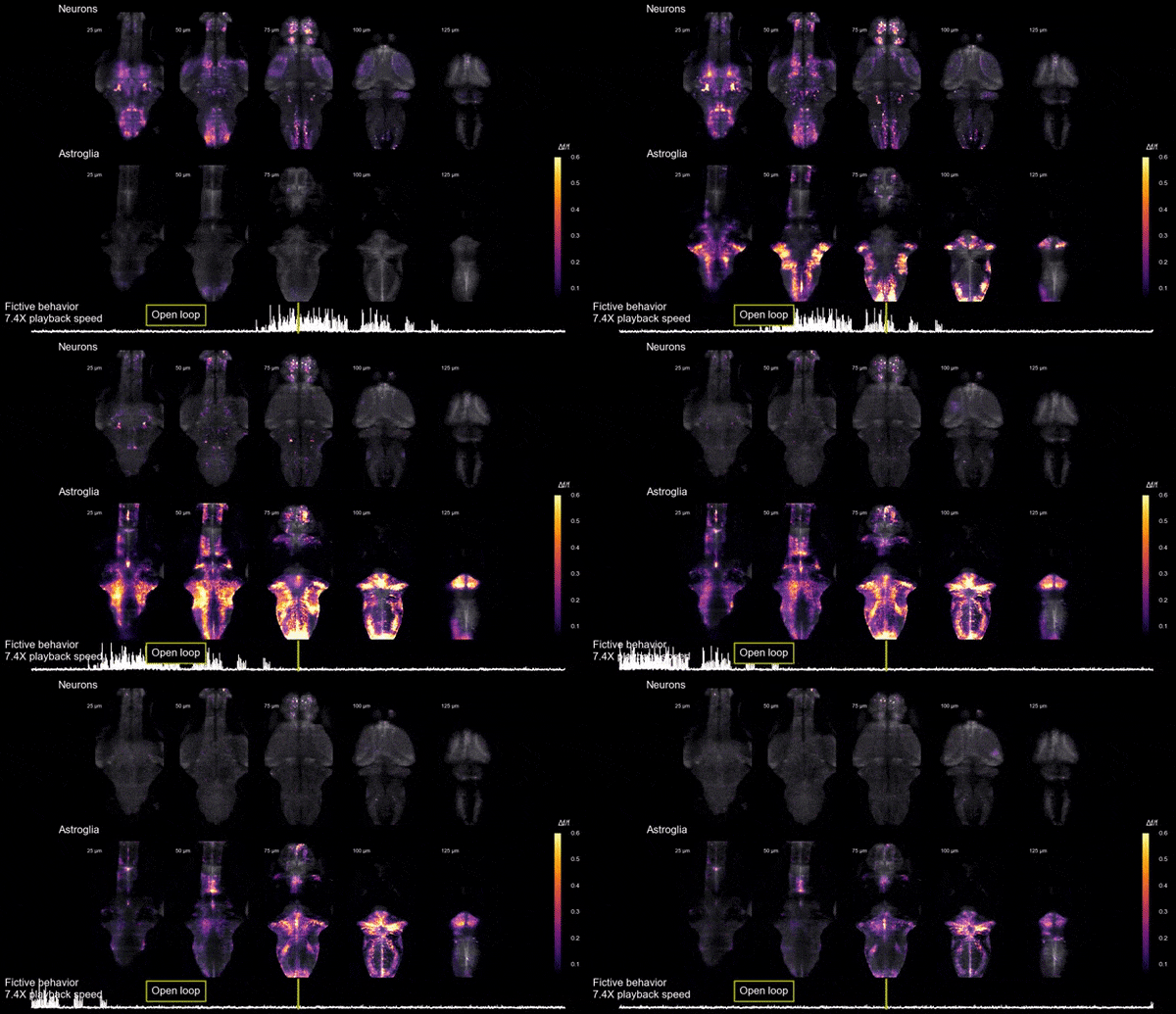
We discovered that shifts in brain and behavioral states occur through the action of astrocytes, and that this cell types takes active part in neural computation: Mu et al., Cell 2019
Besides a direct effect on behavior, astrocytes reorganize neural computation across the brain, with distinct effects on specific computations: Lim et al., bioRxiv 2026
The system under study also implements allostasis for preparatory changes in behavioral states during hypoxia: Zhang et al., bioRxiv 2026
Related work centers on motor learning and its relation to neuromodulation: Kawashima et al., Cell 2016 Voltage imaging identified the cellular computations in the dorsal raphe nucleus: Kawashima et al., Neuron 2025
 Glia-neuron interactions
Having discovered the circuit underlying futility-induced passivity (above), we can now use these cell types to delve into mechanisms of glia-neuron interactions - an area of biology with still many important open questions. How do these cell types 'talk to each other'? What molecules do they exchange? How are glia involved in neural computation? These are some of the questions we have been exploring. See here our work on glia-neuron communication through the purinergic system:
Chen et al., Science 2025
 Technology develompent: whole-brain imaging, voltage imaging, optogenetics, computation
To study interactions between behavior, neurons and glia across the entire brain, we develop new technology for studying, analyzing and manipulating neural activity at the whole-brain scale. Here are examples of our technical work:
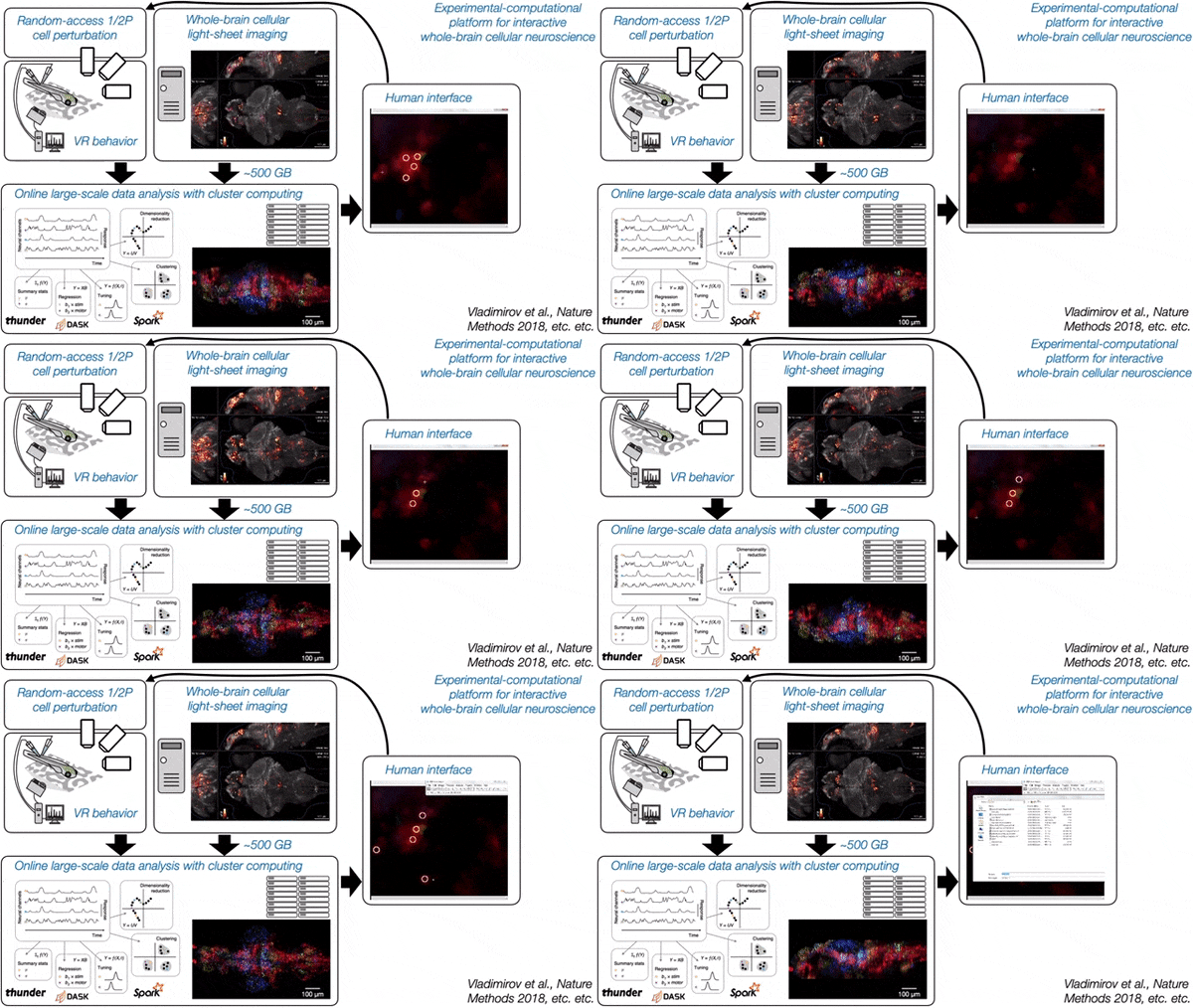
Function-guided brain-wide neural perturbation
Vladimirov et al., Nature Methods 2018
Distributed computation for analysis of large-scale data
Freeman et al., Nature Methods 2016 Bishop et al., arXiv 2026
Whole-brain imaging during virtual-reality behavior
Vladimirov et al., Nature Methods 2014
Whole-brain light-sheet imaging in zebrafish
Ahrens et al., Nature Methods 2013
Voltage imaging in zebrafish
Abdelfattah et al., Science 2019 Kawashima et al., Neuron 2025
 Neural basis of exploratory behavior
In the absence of sensory input, animals still need to explore their environments based on internal neural and bodily cues. How does intrinsic brain activity generate meaningful spontaneous behavior? How do such spontaneous networks interface with sensory-driven and goal-directed behavioral challenges - are these disjoint, or are spontaneously active circuits recruited to implement successively more complex behaviors? We are interested in such questions. Past example publications on this topic include
Dunn et al., eLife 2016
and on sensory-motor transformations:
Chen et al., Neuron 2018
 Further lab interests
We are also interested in the neural basis of learning and memory, and in technology development for neuroscience. And we are always open for collaborations.